
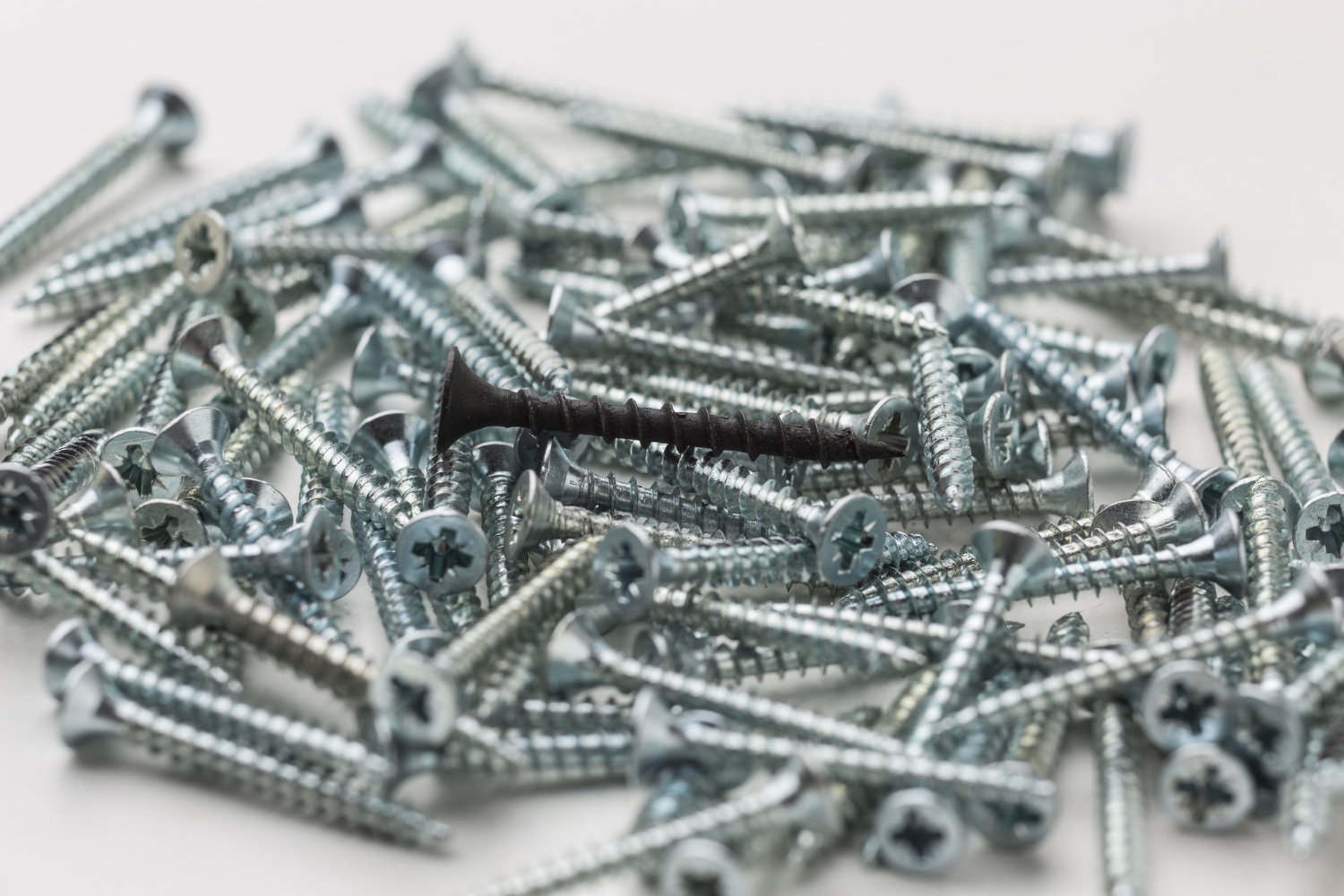
At first glance, wood screws and drywall screws can look almost identical. They’re both threaded fasteners, they come in a variety of lengths, and they can often fit the same drill bit. Because of that, many DIYers assume they’re interchangeable.
In reality, these two types of screws are designed for very different jobs. Using the wrong one can weaken your project, damage materials, or even create a safety issue if the connection fails under stress.
Understanding when to use wood screws and when to reach for drywall screws will help you build stronger, longer-lasting projects around your home.
Why the Difference Matters
Every screw is engineered with a specific purpose in mind. The shape of the threads, the design of the head, and even the hardness of the metal affect how the screw performs.
Wood screws are built to securely join pieces of wood together, while drywall screws are designed to fasten drywall panels to wood or metal framing. Although they may appear similar, they behave very differently once installed.
Choosing the right screw isn’t just about convenience—it’s about creating a safe and reliable connection.
What Are Wood Screws?
Wood screws are specifically designed for fastening wood to wood. Their threads bite deeply into the wood fibers, creating a strong grip that resists pulling apart.
Many modern wood screws also feature sharp points and specially designed threads that reduce splitting and make installation easier.
Common Uses for Wood Screws
Wood screws are ideal for projects such as:
- Building furniture
- Installing shelving
- Framing small projects
- Attaching hinges
- Repairing fences
- Building planter boxes
- Assembling cabinets
Because they’re designed to handle the stresses found in woodworking, they’re the preferred choice for most DIY construction projects.
Features of Wood Screws
Wood screws typically have:
- Deep, coarse threads for excellent grip
- A sharp point for easy starting
- Stronger, more flexible steel
- Flat or rounded heads depending on the application
- Protective coatings for indoor or outdoor use
Many exterior wood screws also include corrosion-resistant coatings that help them withstand moisture.
What Are Drywall Screws?
Drywall screws are designed specifically for attaching drywall sheets to wall studs or ceiling joists.
Their job is to hold drywall securely against framing without tearing the paper surface of the panel.
They’re manufactured for speed and efficiency during drywall installation—not for heavy structural loads.
Common Uses for Drywall Screws
Drywall screws are intended for:
- Hanging drywall on wood studs
- Hanging drywall on metal studs
- Repairing drywall patches
- Installing ceiling drywall
Outside of drywall work, their use should generally be limited.
Features of Drywall Screws
Drywall screws usually have:
- A bugle-shaped head that sits flush below the drywall surface
- Sharp threads that grip framing materials
- A hardened steel construction
- Black phosphate coating for corrosion resistance in indoor environments
Although they’re very hard, drywall screws are also relatively brittle compared to wood screws.
Why Drywall Screws Aren’t Ideal for Woodworking
One of the biggest mistakes beginners make is using leftover drywall screws for woodworking projects.
While they may seem to hold initially, drywall screws have several disadvantages:
- They can snap under heavy loads.
- They aren’t designed to resist repeated movement.
- Their brittle steel is more likely to break than bend.
- The bugle head isn’t ideal for many woodworking applications.
For decorative or non-structural projects they may appear to work, but they’re generally not recommended for furniture, decks, shelving, or structural repairs.
Advantages of Wood Screws
Wood screws offer several important benefits.
They provide:
- Excellent holding strength
- Better resistance to pulling forces
- Greater flexibility under stress
- Lower risk of breaking
- Longer service life in wood projects
Many premium wood screws are also self-drilling, reducing the need for pilot holes in softer woods.
Do Wood Screws Need Pilot Holes?
It depends on the type of wood.
Pilot holes are recommended when working with:
- Hardwood
- Thick lumber
- Large-diameter screws
- Areas close to the edge of a board
Pilot holes help prevent splitting and make driving screws much easier.
In softwoods like pine, many modern wood screws can be installed without pre-drilling, although a pilot hole can still improve accuracy.
Can Drywall Screws Be Used Anywhere Else?
Drywall screws occasionally find use in temporary jigs, workshop fixtures, or simple project mockups where ultimate strength isn’t important.
However, they should not be used for:
- Deck construction
- Stair repairs
- Load-bearing furniture
- Outdoor woodworking
- Structural framing
- Children’s play equipment
For projects involving weight or safety, always choose fasteners designed for the application.
Indoor vs. Outdoor Projects
Another important difference is corrosion resistance.
Many wood screws are available with protective coatings that resist:
- Rain
- Snow
- Humidity
- Pressure-treated lumber
Standard drywall screws, on the other hand, are intended primarily for dry, indoor environments.
Using them outdoors often leads to rust, staining, and premature failure.
Choosing the Right Screw Length
Regardless of the type, selecting the proper length is essential.
A general guideline is that the screw should penetrate the second piece of wood by about half its thickness while remaining completely embedded.
Using screws that are too short can create weak joints, while screws that are too long may protrude through the opposite side.
Common Mistakes to Avoid
When choosing between wood screws and drywall screws, avoid these common errors:
- Using drywall screws for furniture construction
- Installing drywall screws outdoors
- Choosing screws that are too short
- Overtightening screws until they strip the wood
- Skipping pilot holes in hardwood
- Assuming all black screws are suitable for woodworking
Taking a few moments to choose the proper fastener can prevent costly repairs later.
Which One Should You Buy?
If you’re building or repairing anything made of wood, quality wood screws are usually the better investment.
Keep a variety of lengths on hand for common household projects.
Drywall screws are worth having if you plan to install or repair drywall, but they shouldn’t become your go-to screw for every repair simply because they’re inexpensive or readily available.
Using each screw for its intended purpose will produce stronger, safer, and more durable results.
Wood screws and drywall screws may look alike, but they serve very different purposes.
Wood screws are engineered to create strong, long-lasting connections in wood, making them the right choice for furniture, cabinetry, shelving, and most home improvement projects. Drywall screws, on the other hand, are designed specifically to secure drywall to framing and aren’t intended to support heavy loads or withstand the stresses of structural woodworking.
Choosing the correct screw for the job is a small decision that can have a big impact on the quality and durability of your work. By understanding the strengths and limitations of each type, you’ll build projects that are safer, stronger, and made to last.